Walk into a beauty shop and the shampoo aisle can feel harder to navigate than your actual hair routine.
Hydrating. Volumising. Clarifying. Repairing. Colour protection. Curl defining. Scalp balancing. Strengthening.
Which one does your hair actually need?
The answer starts with an important distinction: choose shampoo mainly around your scalp and cleansing needs, and choose conditioner mainly around the condition, texture and needs of your hair lengths.
That means someone can have an oily scalp and dry ends. Fine hair can still be chemically damaged. Curly hair can have buildup. Colour-treated hair can also be oily.
Your hair does not always fit neatly into one label.
A better approach is to identify:
- How quickly your scalp becomes oily
- Whether the lengths feel dry or smooth
- Hair thickness and density
- Straight, wavy, curly or coily texture
- Colour or chemical history
- Heat-styling habits
- Scalp concerns
- How your hair behaves after washing
From there, choosing shampoo and conditioner becomes much simpler.
Quick Answer: How Do I Choose the Right Shampoo and Conditioner?
Use this rule:
Choose shampoo for your scalp. Choose conditioner for your lengths.
If your scalp is:
- Oily: choose effective but appropriate cleansing
- Dry or sensitive: choose a gentler cleanser
- Flaky or persistently itchy: you may need targeted scalp care rather than simply changing beauty shampoo
If your hair is:
- Fine: use lightweight conditioning
- Dry: prioritise moisture
- Curly: use more conditioning and avoid over-washing
- Coloured: use colour-care products
- Damaged: choose gentle cleansing plus conditioning and repair-focused care
- Thick or coarse: richer conditioning may be useful
Dermatologists recommend choosing products according to hair characteristics and washing according to how quickly the scalp becomes dirty or oily.
Should You Choose Shampoo Based on Your Hair or Your Scalp?
Start with the scalp.
Shampoo’s main role is cleansing oil, sweat, dead skin, environmental residue and styling-product buildup.
This is why the right shampoo often depends more on what is happening at the roots than on what is happening at the ends.
For example:
Oily scalp + dry ends
Use a shampoo that cleans the scalp effectively, then apply conditioner through the dry mid-lengths and ends.
Dry scalp + dry hair
Use a gentler shampoo and richer conditioning.
Oily scalp + fine hair
Clean as often as genuinely needed and use lightweight conditioner away from the roots.
Colour-treated scalp + damaged lengths
Use colour-compatible cleansing followed by a conditioner or mask suited to the damaged hair.
You do not have to force both your scalp and lengths into the same category.
How Should You Use Shampoo Properly?
A common mistake is covering the entire hair length with shampoo and rubbing it aggressively.
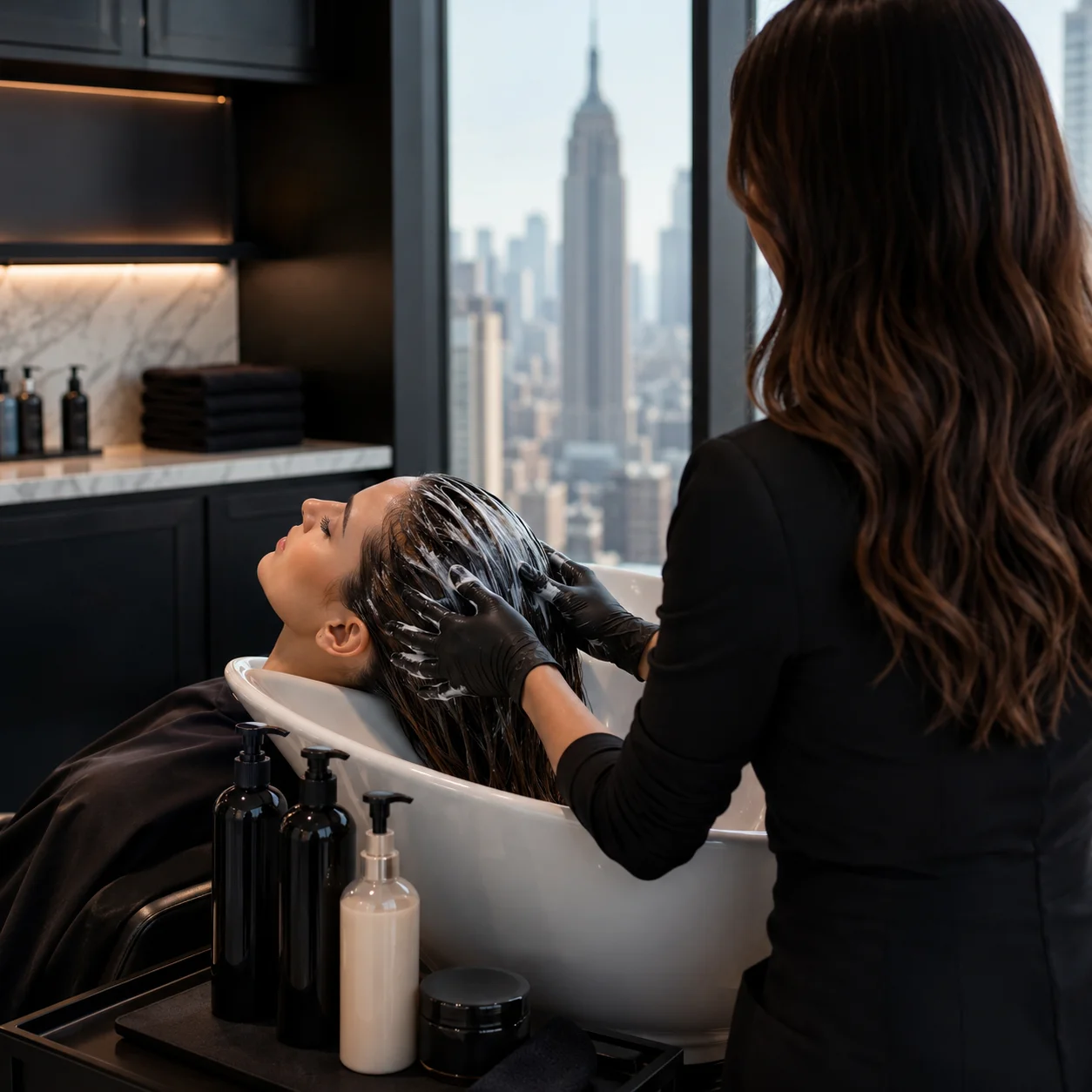
Dermatologists recommend focusing shampoo on the scalp. Massage gently, then allow the cleanser to move through the lengths while rinsing. This can clean the hair without creating unnecessary friction through already-dry ends.
A simple routine:
- Wet the hair thoroughly.
- Apply shampoo mainly to the scalp.
- Massage gently with fingertips.
- Do not aggressively pile and scrub long hair.
- Rinse thoroughly.
- Repeat only if necessary based on buildup and the product instructions.
- Follow with conditioner.
Which Shampoo and Conditioner Are Best for Oily Hair?
Oily hair usually begins with an oily scalp.
Signs include:
- Roots looking greasy soon after washing
- Hair losing volume quickly
- Frequent need for dry shampoo
- Styling products feeling heavy
- Hair separating at the roots
The AAD notes that people with straight hair and oily scalps may need to shampoo frequently, potentially even daily, depending on how quickly the scalp becomes oily.
Look for:
- Shampoo designed for oily hair or frequent cleansing
- Lightweight formulas
- Clarifying shampoo used when genuine buildup develops
- Lightweight conditioner
Conditioner tip
Apply conditioner mainly from the mid-lengths down.
An oily scalp does not mean the ends do not need conditioning.
Avoid:
- Heavy masks on the scalp unless designed for scalp use
- Layering oils around oily roots
- Repeated dry shampoo instead of washing
- Assuming washing less will automatically “train” every scalp to stop producing oil
What Is Best for Dry Hair?
Dry hair may feel:
- Rough
- Dull
- Frizzy
- Difficult to detangle
- Brittle
- Less flexible
- Prone to split ends
Dryness can be related to natural texture, heat, colouring, bleaching, sun exposure, chemical services or routine styling.
Look for:
- Gentle or moisturising shampoo
- Richer rinse-out conditioner
- Leave-in conditioner when appropriate
- Hair masks or treatments according to condition
- Heat protection when styling
Dermatologists recommend moisturising conditioner after shampooing for fragile or damaged hair because conditioning helps coat the strands and reduce breakage and split ends.
If your hair is very dry, simply buying a stronger shampoo is usually not the answer. Your routine needs to reduce unnecessary stripping while restoring conditioning to the lengths.
What Shampoo and Conditioner Should Fine Hair Use?
Fine hair has a smaller individual strand diameter. It can become weighed down more easily, particularly around the roots.
Fine hair may benefit from:
- Lightweight shampoo
- Volumising formulas where appropriate
- Lightweight conditioner
- Conditioner mainly on mid-lengths and ends
- Less heavy oil around the roots
- Careful use of masks
Fine does not mean healthy.
Fine hair can still be:
- Bleached
- Dry
- Heat damaged
- Frizzy
- Colour treated
If fine hair is damaged, choose products that address damage without coating it so heavily that the hair becomes flat.
The AAD similarly recommends lighter leave-in conditioning for fine, straight hair to reduce the risk of a limp or greasy finish.
What Is Best for Thick or Coarse Hair?
Thick or coarse hair often tolerates richer conditioning than fine hair.
Depending on the texture, useful options may include:
- Moisturising shampoo
- Rich conditioner
- Hair masks
- Leave-in conditioner
- Smoothing products
- Appropriate hair oils through the lengths
However, scalp needs still matter.
Someone can have thick hair and an oily scalp. In that situation, you still need to clean the roots properly while providing more moisture further down the hair.
What Shampoo Is Best for Curly or Wavy Hair?
Curly hair tends to need more attention to moisture because natural scalp oils do not travel as easily along bends and curls.
Dermatologists advise avoiding unnecessary over-washing of curly hair and choosing a moisturising shampoo formulated for curly hair. They also recommend conditioning the full hair length rather than only the tips when the hair needs it.
Curly hair may benefit from:
- Moisturising shampoo
- Rich conditioner
- Leave-in conditioner
- Detangling while conditioned
- Reduced heat
- Less frequent washing when appropriate
Wavy hair may need a lighter balance
Some wavy hair becomes flat under very rich products.
Experiment with:
- Lighter moisturising shampoo
- Medium-weight conditioner
- Leave-in only where required
- Styling products that do not overload the roots
The best routine preserves movement without leaving the hair dry or heavy.
What Shampoo and Conditioner Should You Use for Coloured Hair?
Colour-treated hair needs two things:
- Appropriate cleansing
- Enough conditioning to support hair that may also have undergone lightening or chemical processing
Professional colour-care guidance recommends shampoos designed for colour-treated hair and spacing washes rather than shampooing unnecessarily.
Look for products labelled:
- Colour safe
- For colour-treated hair
- Colour protection
- Suitable for highlighted or chemically treated hair
Sulfate-free formulas are common in professional colour-care systems, particularly for clients looking for gentler cleansing.
However, do not choose a product based on one ingredient claim alone. How your scalp and hair respond to the complete formula matters.
For balayage and highlights
You may need both:
- Colour protection
- Repair or moisturising care
For blonde hair
A purple shampoo can help neutralise unwanted yellow warmth in suitable blonde, silver or highlighted hair, but it should be used for tone correction rather than automatically replacing every regular shampoo.
For coloured brunette hair
Choose colour-care products based on condition and tone rather than assuming purple shampoo is necessary.
The Loft’s Color Care Treatment is specifically designed for coloured, highlighted, balayage and chemically treated hair that needs help maintaining softness, shine and a polished appearance.
What Is Best for Damaged or Chemically Treated Hair?
Damaged hair can come from:
- Bleaching
- Repeated colouring
- Straightening
- Excessive heat
- Chemical processing
- Repeated friction
- Sun and swimming exposure
Signs can include:
- Breakage
- Roughness
- Loss of shine
- Frizz
- Tangling
- Split ends
- Hair feeling weak when wet
Use:
- Gentle shampoo
- Conditioner after washing
- Leave-in care where appropriate
- Heat protection
- Repair-focused treatments
- Less unnecessary heat
If hair is significantly compromised, products alone cannot reverse every form of structural damage. You may need to combine professional treatment with a haircut and more conservative styling.
The Loft’s hair treatments include options focused on repair and nourishment, anti-frizz care, colour care, scalp care and shine.
What If You Have an Oily Scalp but Dry Ends?
This is extremely common.
Do not choose one extreme product for the whole head.
Try:
At the roots:
A shampoo appropriate for your oil level.
Through the lengths:
Conditioner appropriate for dryness.
On the ends:
Leave-in conditioner or treatment if needed.
Avoid spreading conditioner heavily onto oily roots unless the formula is specifically meant for scalp use.
This is why understanding both your scalp and strands is more useful than simply saying “I have oily hair.”
Do You Need Clarifying Shampoo?
Clarifying shampoo can help when the scalp and hair have significant buildup from:
- Styling products
- Dry shampoo
- Oils
- Heavy conditioners
- Swimming
- Repeated product layering
It is not necessarily the best everyday shampoo for every hair type.
If your hair is:
- Dry
- Curly
- Bleached
- Coloured
- Fragile
use clarifying products strategically rather than automatically at every wash.
Follow with appropriate conditioning.
Should You Avoid Sulfates, Silicones, Parabens and Other Ingredients?
Hair-care discussions online often reduce product quality to a list of “good” and “bad” ingredients. That can be misleading.
Different formulas serve different purposes.
Sulfates
Some people with dry, curly or colour-treated hair prefer gentler or sulfate-free formulas. Many professional colour-care systems are sulfate-free.
That does not mean every sulfate-containing shampoo is automatically unsuitable for everyone.
Silicones
Silicones can provide slip, smoothing and easier detangling. Very heavy use may not suit every fine-hair routine, but they are not automatically a problem.
Oils
Oils can help dry lengths feel smoother, but applying rich oil repeatedly to an already-oily scalp may make the roots feel heavier.
Proteins and repair ingredients
These may suit damaged or processed hair, but there is no need to choose a formula purely because the front label lists one fashionable ingredient.
Start with your hair’s behaviour and the purpose of the product.
How Often Should You Wash Your Hair?
There is no universal washing schedule.
According to the American Academy of Dermatology:
- Straight hair with an oily scalp may need frequent washing.
- Dry, textured, curly or thick hair generally needs less frequent washing.
- Hair should ultimately be washed according to how quickly it becomes oily or dirty.
Your routine can also change.
You might wash more often when:
- Exercising frequently
- Spending more time outdoors
- Swimming
- Using styling products
- Your scalp is oilier
And less frequently when:
- Hair is dry
- Your texture needs more moisture
- There is little buildup
- Your scalp remains comfortable
Do not let a fixed social-media rule override what your scalp is actually telling you.
Does UAE Weather Change Your Hair-Care Routine?
It can.
Your hair may be exposed to combinations of:
- Strong sun
- Heat
- Humidity
- Air conditioning
- Pool water
- Seawater
- Frequent blowdrying or styling
UV exposure can contribute to dryness, brittleness, frizz and changes in hair colour.
This means your ideal shampoo in one part of the year may not be exactly what your hair needs after a period of swimming, travel or heavier heat styling.
Pay attention to condition rather than staying loyal to a routine that is no longer working.
How Can You Tell Your Shampoo Is Wrong for You?
Look for repeated patterns.
Your shampoo may be too stripping when:
- Hair feels rough immediately after washing
- The scalp feels tight
- Ends become harder to detangle
- Frizz noticeably increases
Your cleansing routine may be too light when:
- Roots remain greasy after washing
- Styling products never fully disappear
- Dry shampoo residue continues accumulating
- Hair feels coated or heavy
Your conditioner may be too rich when:
- Fine hair becomes flat
- Roots become greasy quickly
- Hair feels coated
Your conditioner may be too light when:
- Hair remains rough
- Detangling is difficult
- Ends feel dry soon after washing
- Frizz remains uncontrolled
Adjust one part of the routine at a time so you know what actually helped.
When Is It More Than a Shampoo Problem?
Changing products will not solve every scalp or hair concern.
Speak to a dermatologist or healthcare professional if you experience:
- Persistent severe dandruff
- Significant itching
- Painful scalp
- Open sores
- Sudden hair loss
- Patchy hair loss
- Significant unexplained shedding
Hair-loss shampoos are often marketed aggressively, but Cleveland Clinic notes that shampoo mainly supports scalp and hair health and is not a substitute for diagnosing and treating the actual cause of hair loss.
Build a Hair Routine Around Your Hair, Not the Label
The best shampoo and conditioner combination is the one that works with both your scalp and your strands.
If your roots are oily but your ends are dry, treat them differently. If your curls need more moisture, increase conditioning. If your colour needs protection, use colour-care products. If fine hair feels flat, simplify the routine.
And when your hair has changed because of colour, heat, environmental exposure or repeated styling, your products may need to change with it.
The Loft Fifth Avenue offers professional hair salon services across Dubai, Abu Dhabi and Sharjah, including haircuts, colour, treatments, styling and extensions. Our stylists can assess the condition, texture and history of your hair and help you understand what type of home-care routine makes sense between appointments.
Healthy-looking hair starts with understanding what it actually needs, not choosing whichever bottle makes the biggest promise.
Frequently Asked Questions
How Do I Know What Shampoo Is Right for My Hair?
Start with your scalp. Consider whether it becomes oily quickly, feels dry or is sensitive. Then factor in your hair texture, colour history and damage.
Should Shampoo Match My Scalp or My Ends?
Primarily the scalp. Conditioner and leave-in products can then address the needs of the mid-lengths and ends.
What Shampoo Is Best for Oily Hair?
Choose a shampoo that cleans the scalp effectively without leaving your hair uncomfortable. Washing frequency should reflect how quickly the scalp becomes oily.
What Is Best for Dry Hair?
Use a gentler or moisturising shampoo with a richer conditioner and additional conditioning care when needed.
What Shampoo Is Best for Curly Hair?
A moisturising shampoo designed for curly hair can be useful. Curly hair often benefits from less frequent washing and more conditioning.
Does Fine Hair Need Conditioner?
Yes. Choose a lightweight conditioner and concentrate it mainly through the mid-lengths and ends.
What Should I Use on Colour-Treated Hair?
Choose products specifically formulated for coloured hair and follow with conditioner appropriate for your hair’s condition.
Is Sulfate-Free Shampoo Always Better?
Not necessarily for every person. Sulfate-free formulas can be useful for dry, curly or colour-treated hair, but the complete formulation and your individual needs matter more than one ingredient.
How Often Should I Shampoo?
Wash according to how quickly your scalp becomes oily or dirty. Oily straight hair may need more frequent washing, while dry, curly and textured hair often needs less.
Can Shampoo Stop Hair Loss?
Shampoo can support scalp and hair condition, but persistent or significant hair loss should be medically assessed so the underlying cause can be identified.