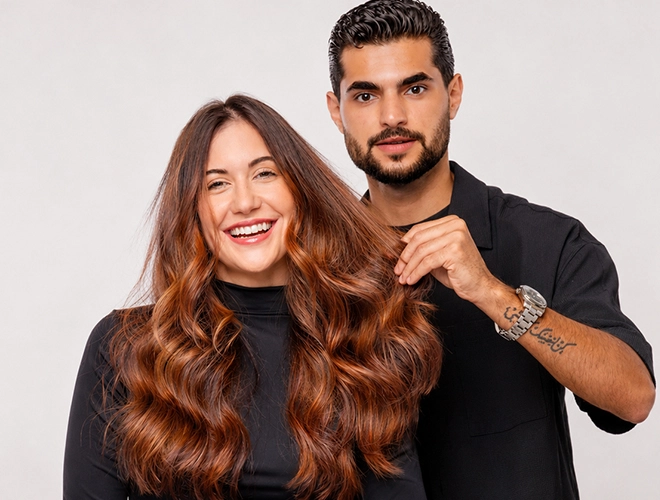
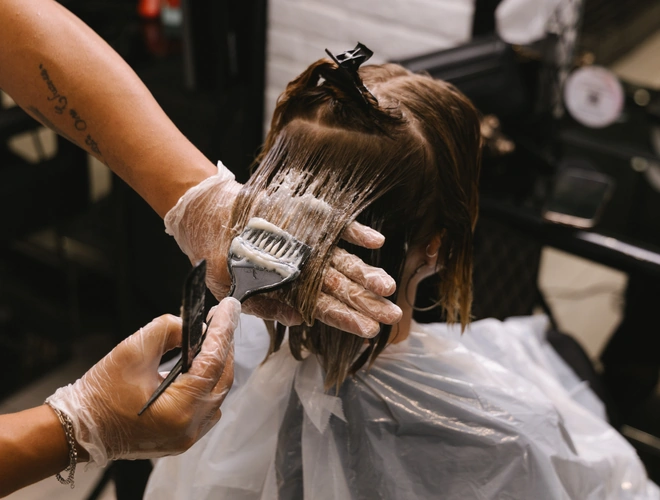
You have just left the salon with fresh colour, glossy hair and exactly the tone you wanted. A few days later, your roots start to feel oily, but you are not ready for another full wash.
This is where dry shampoo can be useful.
Yes, you can generally use dry shampoo on colour-treated hair. Because dry shampoo absorbs excess oil without rinsing the hair with water, it can help extend the time between wet washes. That can be useful for maintaining freshly coloured hair, particularly when you want your roots to feel fresher without shampooing the entire head.
The important part is how you use it.
Dry shampoo is a refresh product, not a replacement for regular shampoo. Too much can build up on the scalp, while the wrong application can leave hair looking dull or powdery. The American Academy of Dermatology recommends washing with regular shampoo and water after one or two dry-shampoo uses rather than relying on dry shampoo continuously.
If you have recently had balayage, highlights, Airtouch, a root refresh or full colour at The Loft Fifth Avenue, a few simple changes to your routine can help keep the finish looking fresher between salon visits.
Quick Answer: Is Dry Shampoo Safe for Coloured Hair?
Usually, yes.
For colour-treated hair:
- Choose a dry shampoo suited to your hair type and colour.
- Concentrate it around oily roots rather than covering the full lengths.
- Use only as much as you need.
- Do not rely on it instead of washing your scalp.
- Wash with regular shampoo after one or two dry-shampoo applications.
- Choose colour-care products for your wet-wash routine.
- Follow your colourist’s specific aftercare instructions after a technical colour service.
The American Academy of Dermatology specifically recommends choosing dry shampoo according to both hair type and hair colour, because formulas and shades can differ.
What Does Dry Shampoo Actually Do?
Despite the name, dry shampoo does not wash your hair in the traditional sense.
Most formulas use absorbent ingredients that help take up oil around the roots and scalp. Depending on the product, they may come as:
- Aerosol sprays
- Powder sprays
- Loose powders
- Tinted formulas for different hair colours
After application, the roots may look less oily and the hair can feel lighter or have more volume.
What dry shampoo does not do is remove everything that accumulates on your scalp.
Regular shampoo and water help remove oil, dead skin cells, microorganisms and product residue. Dry shampoo primarily absorbs oil rather than rinsing this material away.
Think of it as a way to refresh your hairstyle between washes, not as a substitute for washing.
Does Dry Shampoo Make Hair Colour Fade?
Dry shampoo itself does not rinse pigment from the hair in the same way repeated wet shampooing can.
This is one reason it can be useful for colour-treated hair. Extending the time between wet washes may help reduce how frequently coloured hair is exposed to shampooing and water.
Professional colour-care guidance also commonly recommends spacing out washes and using products specifically formulated for colour-treated hair to help maintain colour vibrancy.
However, that does not mean you should keep layering dry shampoo onto the scalp for days.
Excess product can:
- Build up around the roots
- Make hair appear dull
- Affect how fresh the scalp feels
- Create a powdery finish
- Make the hair harder to style cleanly
The goal is fewer unnecessary washes, not avoiding regular shampoo altogether.
Can I Use Dry Shampoo Immediately After Colouring My Hair?
There is no universal rule that everyone must wait exactly 48 or 72 hours before using dry shampoo.
The appropriate routine depends on:
- The colour service performed
- The products used
- Your scalp condition
- Whether lightener was involved
- Whether your scalp feels sensitive afterwards
- Your colourist’s specific instructions
If your scalp feels comfortable, dry shampoo may be used between wet washes according to the product directions.
If your scalp feels irritated, tight, itchy or unusually sensitive after colouring, avoid adding unnecessary products until it settles and contact your salon if you are concerned.
For the first wet shampoo, follow the timing recommended by the colourist who performed the service rather than applying a generic internet rule to every type of colour.
How Do You Apply Dry Shampoo to Coloured Hair Correctly?
Technique makes a noticeable difference.
Step 1: Start with dry hair
Dry shampoo is designed for dry roots. Applying it to damp hair can create uneven residue.
Step 2: Divide the hair into sections
You do not need dozens of sections. Simply expose the oilier areas around:
- The hairline
- Crown
- Parting
- Sides of the scalp
Step 3: Apply mainly to the roots
Do not cover freshly coloured lengths unnecessarily.
The mid-lengths and ends usually need moisture rather than additional oil-absorbing product.
Step 4: Use the recommended distance
Follow the product instructions. With spray formulas, holding the can too close can deposit too much product in one spot.
Step 5: Give it time to absorb
Do not immediately brush it away.
Let the product sit according to its directions so it can absorb oil.
Step 6: Massage or distribute gently
Use clean fingertips or a brush appropriate for your hair type.
Avoid aggressive rubbing, particularly when the hair has recently been bleached or lightened.
Step 7: Check the result before adding more
More dry shampoo is not necessarily better.
If your roots look refreshed, stop there.
How Often Can You Use Dry Shampoo?
The American Academy of Dermatology recommends using regular shampoo and water after one or two dry-shampoo applications.
That is a much better guideline than deciding you must use dry shampoo a certain number of days every week.
For example:
Day 1: Wash and style
Day 2: No dry shampoo needed
Day 3: Light dry shampoo at the roots
Day 4: Refresh if genuinely necessary
Next: Proper shampoo and scalp cleanse
Your actual routine may differ depending on:
- Scalp oil production
- Hair texture
- Exercise
- Styling products
- UAE heat
- Time outdoors
- How frequently you wear your hair down
An oily scalp may need more regular washing than dry, curly or textured hair. The AAD recommends basing washing frequency on how quickly the hair and scalp become dirty or oily rather than following one schedule for everyone.
Which Dry Shampoo Is Best for Dyed Hair?
Look for a formula that works with both your hair colour and your hair type.
For dark hair
A tinted or low-residue formula may help prevent an obvious pale cast at the roots.
For blonde or highlighted hair
A lightweight formula can refresh the roots without coating the brighter lengths.
For fine hair
Choose something light enough that the roots do not become heavy.
For dry or textured hair
Avoid applying dry shampoo all over the hair. Concentrate on genuinely oily areas so already-dry lengths are not made to feel rougher.
For sensitive scalps
If your scalp feels dry or uncomfortable after using a product, the AAD suggests considering a fragrance-free dry shampoo formulated for your hair type and colour.
Can Dry Shampoo Help Balayage, Highlights and Airtouch Last Longer?
Indirectly, yes.
Balayage, highlights and Airtouch do not disappear simply because you shampoo your hair, but colour and toner can gradually change between appointments.
Reducing unnecessary wet washing can be one part of a colour-maintenance routine.
The bigger picture includes:
- Using appropriate colour-care shampoo and conditioner
- Reducing unnecessary heat
- Protecting hair during swimming and strong sun exposure
- Maintaining moisture
- Booking toner or colour refresh appointments when needed
- Using professional colour-care treatments when the hair feels dry or dull
UV exposure can contribute to colour changes and protein damage in the hair, which may show as dryness, brittleness, frizz and reduced shine.
This matters particularly in the UAE, where strong sun, swimming, heat styling and air conditioning can all become part of the weekly routine.
What Should You Use When You Do Wash Coloured Hair?
Dry shampoo should complement a proper colour-care routine rather than replace it.
When it is time to wash:
Use a shampoo suitable for coloured hair
Professional colour-care ranges are designed to cleanse while supporting colour vibrancy and hair condition.
Focus shampoo on the scalp
You generally do not need to aggressively rub shampoo through the entire length. Dermatologists recommend gently massaging shampoo into the scalp and allowing it to move through the hair as you rinse.
Condition your lengths
Colouring, highlighting and heat styling can leave hair needing more conditioning.
Use conditioner mainly through the mid-lengths and ends unless the product is specifically intended for scalp use.
Use cooler, comfortable water
There is no need to suffer through freezing water. Simply avoid excessively hot water that leaves the scalp and hair feeling stripped or dry.
When Does Coloured Hair Need More Than Home Care?
Dry shampoo cannot fix:
- Significant dryness
- Breakage
- Split ends
- Rough texture
- Unwanted brassiness
- Faded toner
- Uneven colour
- Scalp problems
When your colour still looks good but the hair feels dry or dull, a professional treatment may be a better next step.
The Loft’s Color Care Treatment is designed for coloured, highlighted, balayage and chemically treated hair that needs additional support for softness, shine and manageability.
You can also explore our wider hair treatments for concerns including dryness, frizz, scalp care, repair and shine.
Common Dry Shampoo Mistakes After Hair Colour
Avoid these habits:
- Spraying the entire head when only the roots are oily
- Applying too much product at once
- Using dry shampoo day after day without washing
- Scrubbing freshly lightened hair aggressively
- Ignoring scalp irritation
- Using dry shampoo to cover an unclean scalp indefinitely
- Applying a pale formula heavily onto dark roots
- Forgetting conditioner during your regular wash routine
- Using high heat constantly because you are washing less frequently
Dry shampoo works best when it makes your routine easier, not when it becomes the routine.
Keep Your Hair Colour Fresh Between Salon Visits
Dry shampoo can be a useful part of coloured-hair maintenance. Use it when the roots need refreshing, apply it lightly and return to proper shampooing before buildup becomes an issue.
For longer-lasting salon results, think beyond one product. Your washing frequency, conditioner, heat styling, sun exposure, swimming routine and professional maintenance all influence how your hair looks between appointments.
The Loft Fifth Avenue offers hair colour services including balayage, Airtouch, highlights, full colour, root touch-ups, toner and ombre across selected salons in Dubai, Abu Dhabi and Sharjah.
A good colour routine should keep your hair looking polished without making everyday maintenance complicated.
Frequently Asked Questions
Can I use dry shampoo the day after dying my hair?
Generally, dry shampoo can be used between wet washes if your scalp feels comfortable and the product is suitable for your hair. Follow any specific aftercare instructions given by your colourist.
Does dry shampoo strip hair colour?
Dry shampoo does not rinse the hair with water, so it does not work like a regular shampoo. However, excessive buildup is not healthy for the scalp, so regular shampooing is still necessary.
How often should I use dry shampoo on coloured hair?
Rather than using it continuously, dermatologists recommend washing normally after one or two dry-shampoo applications.
Can dry shampoo make coloured hair look dull?
Too much product or residue can make roots and hair look powdery or dull. Use a small amount and concentrate on oily areas.
Is dry shampoo good for balayage?
It can help refresh oily roots between washes, which may reduce unnecessary shampooing. Balayage maintenance also depends on colour-care products, heat protection and periodic salon maintenance.
Can I use dry shampoo after highlights?
Yes, provided your scalp is comfortable and you follow the product and stylist’s instructions. Apply mainly around oily roots rather than repeatedly coating lightened lengths.
Do I still need normal shampoo?
Yes. Dry shampoo absorbs oil but does not replace cleansing with shampoo and water.
What if my scalp feels itchy after colouring?
Avoid adding unnecessary products to an irritated scalp. If itching, redness, swelling or discomfort is significant or persists, contact your salon and seek appropriate medical advice if needed.
Should coloured hair be washed every day?
Not necessarily. Washing frequency depends on scalp oil production, hair texture, exercise and lifestyle. Use a schedule appropriate for your own scalp and hair.